
Open Shelving vs. Closed Cabinets: Choosing the Right Storage Style

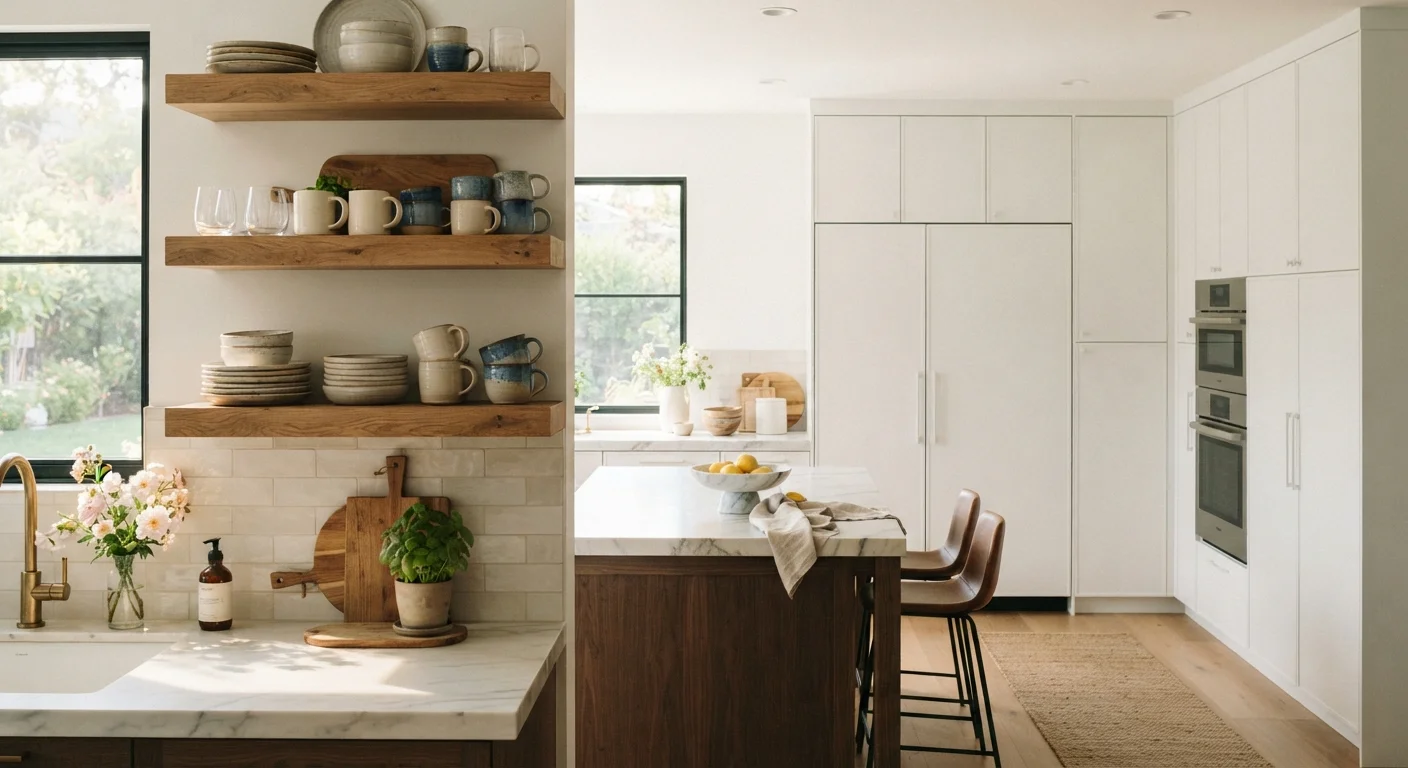
Photo: InsightsTurbo.com | Kickstart Your Knowledge Quest editorial
Key Takeaways
- Open shelving creates visual openness but requires ongoing organization to avoid a cluttered appearance.
- Closed cabinets hide mess effortlessly and protect items from dust, grease, and humidity.
- Renters should check lease terms before installing any wall-mounted shelving or cabinetry.
- A hybrid approach - combining both styles - often delivers the best of both worlds.
- Your cleaning habits and organizational tendencies matter more than aesthetics alone.
What Each Storage Style Actually Involves
Before committing to either option, it helps to understand what you're really signing up for - beyond how each looks in a home décor photo.
Open shelving means mounted or freestanding shelves with no doors. Everything stored on them is permanently visible. This works as a design feature when items are curated and consistently tidy, but it can quickly feel chaotic if dishes, paperbacks, or pantry staples are haphazardly arranged. Open shelves also collect dust noticeably faster than enclosed storage - a real consideration in kitchens or near HVAC vents.
Closed cabinets use doors - hinged, sliding, or push-to-open - to conceal contents. The practical upside is significant: you can close the door on imperfect organization and the space still looks clean. The tradeoff is that cabinets can feel visually heavy, especially in smaller rooms, and items stored toward the back of deep cabinets are easy to forget about.
For renters setting up a first home, it's worth checking your lease before wall-mounting anything. Many landlords restrict drilling, which limits some open shelving options. Freestanding shelving units and cabinet furniture avoid this issue entirely. See our guide to personalizing a shared apartment for more on navigating landlord restrictions.
Head-to-Head: How They Compare Across Key Factors
The right storage style depends on how you actually live - not just how you want your space to look. Here's how the two options stack up across the factors that matter most for everyday life.
| Criterion | Open Shelving | Closed Cabinets |
|---|---|---|
| Visual weight | Light, airy feel | Can feel heavier in small rooms |
| Dust accumulation | Collects dust quickly | Protected behind doors |
| Maintenance effort | High - always visible | Low - hidden from view |
| Installation (renter-friendly) | Varies - wall mounting often needed | Freestanding units available |
| Kitchen grease protection | Minimal - items exposed | Strong - doors seal contents |
| Display potential | High - items showcased | Low - contents hidden |
| Cost (general range) | Often lower upfront | Higher for built-in units |
Notice that neither option wins across every category. That's why many designers and homeowners lean toward a hybrid approach: closed cabinets for everyday clutter (pots, cleaning supplies, pantry staples) and open shelving reserved for intentionally styled items like a small book collection, a few plants, or attractive dishware you actually use daily.
If visual spaciousness is a priority - particularly in a compact apartment - open shelving along one wall can reduce the boxed-in feeling that a full bank of upper cabinets creates. Our article on making a small room feel larger explores how storage choices affect perceived space.
The Honest Maintenance Reality
Maintenance is where the open shelving fantasy most often meets real life. Open shelves require you to keep things organized all the time - not just when guests come over. A week of busy evenings can leave visible shelves looking chaotic, and kitchen shelves near a stove accumulate grease and cooking residue that needs wiping down regularly.
Closed cabinets are far more forgiving. A disorganized cabinet still presents a clean exterior. The main maintenance concern is interior build-up of expired or forgotten items - a problem solved by occasional purging rather than constant tidying.
~2×
How much faster open shelves collect dust vs. closed storage
Interior designers and cleaning experts commonly note open shelves need wiping at least twice as often as surfaces behind cabinet doors.
60%+
US renters who must get landlord approval before wall drilling
Most standard US lease agreements require landlord consent for any wall alterations, affecting mounting options for open shelving.
If you're prone to accumulating things or you're still figuring out your organizational style, closed cabinets reduce the pressure significantly. For readers working through what to keep versus what to let go, our piece on common decluttering myths is worth a read before you commit to an open-shelf setup.
For small-space storage ideas that work alongside either approach, storage solutions for tight spaces covers vertical storage, under-bed options, and multi-use furniture that pair well with both shelving styles.
The content provided on our blog site traverses numerous categories, offering readers valuable and practical information. Readers can use the editorial team’s research and data to gain more insights into their topics of interest. However, they are requested not to treat the articles as conclusive. The website team cannot be held responsible for differences in data or inaccuracies found across other platforms. Please also note that the site might also miss out on various schemes and offers available that the readers may find more beneficial than the ones we cover.