
Why Cats Knock Things Off Tables (and What It's Actually Communicating)

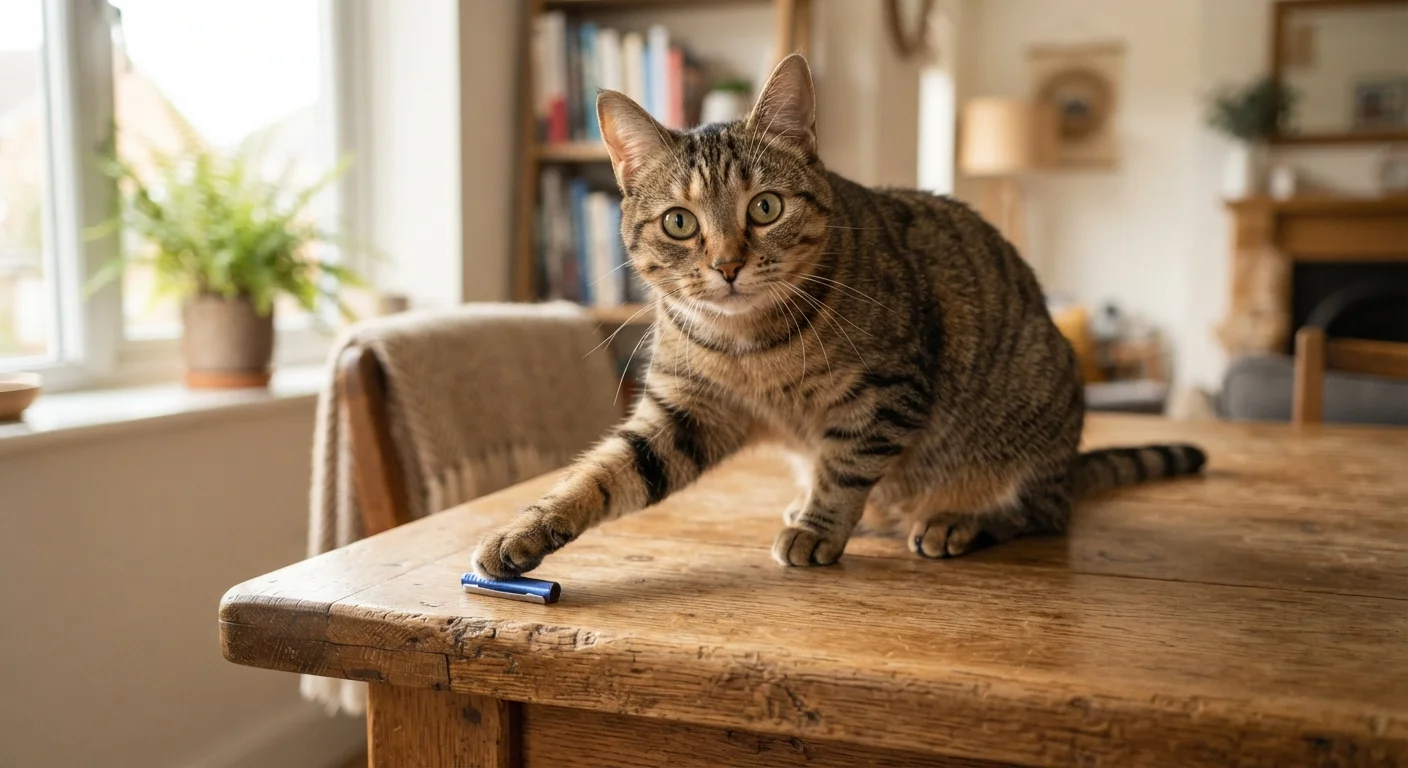
Photo: InsightsTurbo.com | Kickstart Your Knowledge Quest editorial
Key Takeaways
- Cats knock things off tables to investigate, hunt, seek attention, or relieve boredom — not out of spite.
- The behavior is rooted in natural predatory instincts that remain active in domestic cats.
- Frequent knocking is often a signal that your cat needs more mental or physical stimulation.
- Reacting strongly to the behavior can actually reinforce it by rewarding the cat with attention.
- Simple environmental changes can significantly reduce the frequency of this behavior.
The Predator Logic Behind the Paw Swipe
Domestic cats share nearly identical neurological wiring with their wild ancestors. Their paws aren't just for walking — they're precision sensory instruments used to probe, test, and interact with objects in the environment. When your cat taps something on a table and watches it fall, they're essentially running a low-stakes version of the same behavioral sequence they'd use to assess whether something is prey, alive, or safe to approach.
This investigative paw-batting is particularly common in cats that don't have enough opportunities to hunt or stalk. Indoor life removes the need to hunt for food, but it doesn't remove the drive. Object manipulation fills that gap — the motion of a tumbling item, the noise it makes, and your reaction all provide the sensory feedback that would normally come from interacting with prey.
~600
Million domestic cats worldwide
Estimates from wildlife researchers suggest there are roughly 600 million domestic cats globally, all carrying the same core predatory instincts as their wild relatives.
26%
Of U.S. households own at least one cat
According to the American Pet Products Association's National Pet Owners Survey, cats are one of the most common companion animals in the United States.
Up to 40
Sensory receptors per cat paw pad
Feline paw pads contain dense concentrations of mechanoreceptors, making them highly sensitive touch organs — which explains why cats use them to probe and investigate objects.
When It's About You, Not the Object
Here's where many new cat owners are surprised: knocking things over is often a highly effective communication strategy your cat has deliberately learned. If you've ever jumped up, yelped, or rushed over when your cat sent your coffee mug toward the edge — congratulations, your cat just trained you.
Cats are observant and adaptive. They learn quickly which actions produce responses from their owners. A cat that gets ignored while you work but then receives immediate eye contact and verbal reaction when they nudge your pen off the desk has identified a reliable method of getting your attention. The behavior gets reinforced every time it works.
This is especially worth watching for in cats living alone without other pets who rely entirely on their human for social engagement. The more attention-deprived a cat feels, the more creatively they'll seek it out.
Ignore the Behavior, Not the Cat
Reading the Behavior in Context
Not every knocked-over item means the same thing. Context matters, and paying attention to the when and how can help you decode what your cat is actually communicating.
- Early morning knocking: Often hunger or schedule-related. Your cat has learned this triggers feeding.
- Knocking while you're distracted: Almost certainly attention-seeking — they want engagement, not the object.
- Systematic batting and watching: Pure curiosity. Your cat is studying cause and effect.
- Knocking paired with vocalizing: High urgency communication — something your cat needs isn't being met.
Understanding these nuances is part of the broader skill of reading feline communication. The full picture of your cat's body language — posture, tail position, ear angles — gives you better context for interpreting moments like these.
What You Can Actually Do About It
The most effective response to frequent object-knocking is to address the underlying need rather than focus on the behavior itself. Punishment doesn't work well with cats and can erode trust. What does work is making the behavior less necessary.
Increase structured play. Two focused play sessions per day — using wand toys, puzzle feeders, or food-dispensing toys — gives your cat an appropriate outlet for predatory energy. This is especially relevant for only cats who need extra stimulation.
Don't reward the behavior with big reactions. A calm, boring response removes the payoff. If your cat learns that knocking things over produces nothing interesting, the motivation weakens.
Reduce opportunity where it matters. If there are specific objects your cat targets — glasses near your keyboard, items on a nightstand — remove them or relocate them. You don't have to clear every surface, just the high-value targets.
If you notice the behavior escalating alongside other changes — shifts in eating, litter box habits, or social behavior — it may be worth checking in with a veterinarian. Behavioral changes can occasionally reflect underlying health issues worth ruling out. For litter-related changes in particular, common litter box mistakes are often the first thing to rule out.
Frequently Asked Questions
The content provided on our blog site traverses numerous categories, offering readers valuable and practical information. Readers can use the editorial team’s research and data to gain more insights into their topics of interest. However, they are requested not to treat the articles as conclusive. The website team cannot be held responsible for differences in data or inaccuracies found across other platforms. Please also note that the site might also miss out on various schemes and offers available that the readers may find more beneficial than the ones we cover.