
Things First-Time Dog Owners Wish They'd Known Earlier

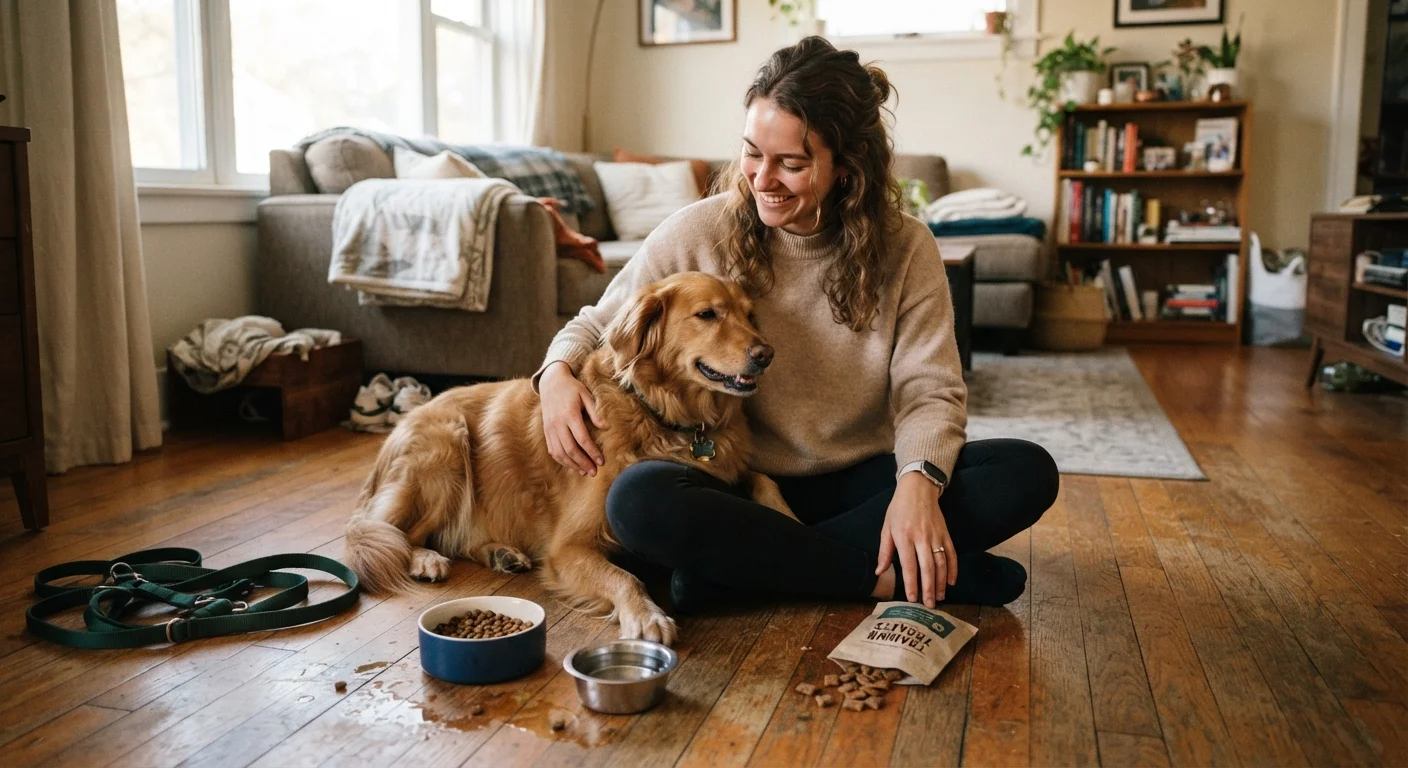
Photo: InsightsTurbo.com | Kickstart Your Knowledge Quest editorial
Key Takeaways
- Dogs need far more structured alone-time training than most first-time owners anticipate.
- Routine veterinary costs — vaccines, parasite prevention, annual checkups — add up quickly and should be budgeted in advance.
- Socialization before 14 weeks shapes a dog's temperament for life; missing this window has lasting consequences.
- Consistency in rules and training across everyone in the household makes a measurable difference in behavior.
- Understanding your dog's body language prevents miscommunication and builds a stronger, safer bond.
What No One Tells You Before You Bring a Dog Home
Adopting a dog feels straightforward until the first week lands. Suddenly there are questions about feeding schedules, crate protests at 2 a.m., and a puppy that treats your shoes as enrichment. Most of this is normal — but knowing what to expect before it happens makes a genuine difference.
The lessons below come from patterns experienced owners consistently describe: things they had to learn through trial and error that, with a little earlier guidance, could have saved stress for both them and their dogs. Whether you're still deciding or already a few weeks in, these insights are worth having now. For a broader view of what those first weeks actually involve, see our guide to bringing a dog home for the first time.
Alone time is a skill your dog has to learn
Many first-time owners assume dogs handle solitude naturally. In reality, being alone is something dogs need to be gradually and deliberately taught — especially puppies. Without this foundation, even a few hours of separation can trigger anxious behavior: destructive chewing, excessive barking, or house-training accidents.
Start with very short absences (even just stepping out of the room) and build up slowly. Pairing departure with something positive — a food puzzle, a chew — helps dogs associate alone time with calm rather than distress. Crate training, done humanely, can be a reliable tool for building this skill.
Being alone is a skill — one your dog needs you to teach them, gradually and positively.
Routine vet costs are higher than most people budget for
The adoption or purchase fee is often the smallest expense of the first year. Annual wellness exams, core vaccinations, heartworm testing, flea and tick prevention, and spay/neuter surgery all carry real costs that catch many first-time owners off guard.
Building a dedicated pet fund from day one — separate from your general budget — gives you a cushion for both expected and unexpected expenses. Understanding what a standard vet schedule involves is a useful first step; our breakdown of vaccinations, worming, and flea prevention explains what's typically recommended and why.
Annual wellness care, vaccines, and prevention add up fast — budget for them before you bring your dog home.
The socialization window closes faster than you think
Between roughly 3 and 14 weeks of age, puppies are in a critical developmental phase during which exposure to new people, animals, surfaces, sounds, and environments shapes how they respond to those things for the rest of their lives. Miss this window, and building confidence later requires significantly more work.
Safe, positive exposure — not overwhelming flooding — is the goal. Even brief, well-managed encounters during this period make a lasting difference. Our article on early socialization and why timing matters goes deeper on what this phase involves.
The socialization window between 3 and 14 weeks is brief, influential, and can't be fully recovered later.
Inconsistency across the household undermines training
Dogs learn from patterns. If one person allows jumping on the couch while another corrects it, the dog doesn't learn a rule — it learns the situation is unpredictable. This applies to feeding, commands, crating, and play boundaries.
Getting everyone in the household on the same page before the dog arrives — and revisiting that agreement when it slips — is one of the highest-leverage things you can do for your dog's behavior and your own sanity. Consistent expectations aren't strict; they're clear, and dogs thrive on clarity.
Dogs learn from patterns — if house rules shift by person, training progress stalls.
Your dog's body language is telling you something
Tail wagging doesn't always mean happy. Ears pinned back, a stiff body, yawning in a tense moment, or a low tail tucked under — these are signals dogs use to communicate stress, discomfort, or uncertainty. First-time owners who learn to read these cues early build stronger, safer relationships with their dogs.
Misreading stress signals as stubbornness or excitement can lead to situations where dogs feel they have no choice but to escalate. A basic understanding of canine body language is one of the most practical investments you can make in the first few months.
Learning to read your dog's stress signals early prevents miscommunication before it becomes a problem.
Food choices matter more than the packaging suggests
Not all dog foods are nutritionally equivalent, and marketing language on bags — words like "natural," "premium," or "grain-free" — doesn't reliably indicate quality. What matters is whether the food meets established nutritional standards for your dog's life stage, size, and health profile.
Your vet is the right first stop for feeding guidance, but it also helps to understand the practical differences between food types. Our comparison of dry kibble vs wet food walks through nutrition, cost, and dental considerations in plain terms.
Packaging language rarely reflects nutritional quality — your vet and the ingredient panel are more reliable guides.
Weight management starts with what's on the bowl
Overfeeding is one of the most common mistakes new dog owners make — and one of the easiest to miss. Because weight gain happens gradually, it can be well underway before it's visually obvious. Excess weight in dogs is linked to joint problems, reduced stamina, and shorter lifespan.
Following the feeding guidelines on your dog's food is a starting point, but those figures are general estimates. Adjusting for your specific dog's activity level, age, and body condition — ideally with your vet's input — leads to better outcomes. Our article on getting your dog's weight right explains how vets assess body condition and why it matters long-term.
Overfeeding is easy to miss and hard to reverse — portion discipline from day one pays off.
Building on These Lessons
Dog ownership doesn't flatten out after the first month — it evolves. But owners who invest early in the fundamentals consistently report a smoother experience as their dog matures. Structure, consistency, and realistic expectations are the throughline connecting every lesson above.
Know when to call the vet
If you're navigating specific early challenges, our article on common new dog owner pitfalls is a useful companion read. And if you're curious how the adjustment curve compares to other types of pet ownership, the lessons first-time small pet owners share offer a helpful parallel perspective.
This article is for general informational purposes only and does not constitute veterinary or medical advice. Always consult a licensed veterinarian for guidance specific to your dog's health and care needs.
The content provided on our blog site traverses numerous categories, offering readers valuable and practical information. Readers can use the editorial team’s research and data to gain more insights into their topics of interest. However, they are requested not to treat the articles as conclusive. The website team cannot be held responsible for differences in data or inaccuracies found across other platforms. Please also note that the site might also miss out on various schemes and offers available that the readers may find more beneficial than the ones we cover.