
Guinea Pig or Rabbit: Choosing Between Two Popular Companion Animals

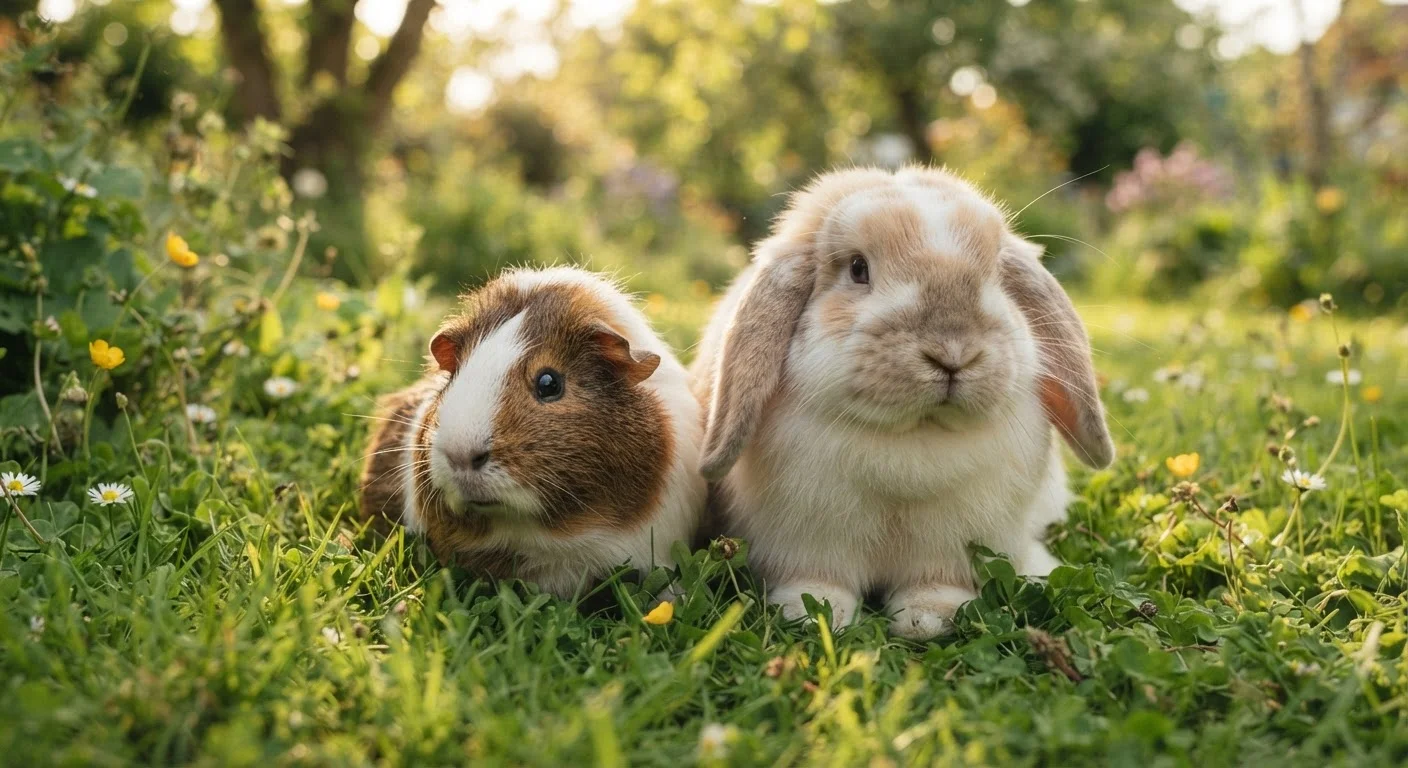
Photo: InsightsTurbo.com | Kickstart Your Knowledge Quest editorial
Key Takeaways
- Guinea pigs are generally easier to handle and less fragile than rabbits, making them better for younger or first-time owners.
- Rabbits live significantly longer — often 8–12 years — requiring a more serious long-term commitment.
- Both species need companions of their own kind and should not be housed together.
- Unlimited timothy hay is the dietary cornerstone for both animals, but rabbits are more sensitive to dietary mistakes.
- Rabbits need considerably more space and daily exercise outside their enclosure to stay healthy.
- Both species require access to a rabbit-savvy or exotic vet, which can be harder to find and more costly than a typical small animal vet.
Temperament and Handling: Which Is More Beginner-Friendly?
Guinea pigs — also called cavies — are famously gentle. They rarely bite, tend to stay still when held, and communicate clearly through a range of sounds: purring when content, wheeking when excited, and chattering when unhappy. This vocal feedback loop makes them surprisingly easy to read for a new owner.
Rabbits are more complex. They can be affectionate on their own terms, but many dislike being picked up and will struggle if restrained. A rabbit's powerful hind legs can cause injury to the animal itself — broken backs are a real risk if a rabbit panics while being held incorrectly. That said, rabbits that are well-socialized from a young age and given space to approach interactions on their own schedule often become remarkably bonded to their owners.
For households with young children, guinea pigs are generally the safer choice. For patient owners willing to learn rabbit body language, the bond that develops can be deeply rewarding. See our balanced look at rabbit ownership for a fuller picture of what life with a rabbit actually involves.
| Criterion | Guinea Pig | Rabbit |
|---|---|---|
| Typical lifespan | 4–7 years | 8–12 years |
| Ease of handling | Generally tolerant, low injury risk | Requires careful technique; can injure self |
| Minimum enclosure space (pair) | ~7.5 sq ft | Large hutch + daily roaming area |
| Social needs | Strongly prefers same-species companion | Strongly prefers same-species companion |
| Key dietary requirement | Hay + vitamin C from fresh veg | Hay + leafy greens; very low sugar tolerance |
| Noise level | Vocal and expressive throughout the day | Quiet; communicates through body language |
| Suitability for young children | Generally good with supervision | Better for older children and adults |
| Litter trainable | Partially, with effort | Yes, reliably with consistency |
Space, Housing, and Daily Care Requirements
Neither animal belongs in a small cage — this is one of the most common misconceptions new owners carry into pet stores. Guinea pigs need a minimum of 7.5 square feet of living space for a pair, with larger always being better. A C&C (coroplast and cube grid) enclosure is a popular, customizable option. They don't require supervised out-of-enclosure time the way rabbits do, though floor time is enriching.
Rabbits need significantly more room. A rabbit should have at minimum a large enclosure plus several hours of supervised exercise space daily. Many rabbit welfare organizations now recommend against traditional hutches entirely, citing insufficient space. Rabbits that don't get adequate movement are prone to obesity, GI problems, and behavioral issues like destructive chewing.
Both animals produce a fair amount of waste and require regular cage cleaning — at minimum spot-cleaning daily and a full clean weekly. Neither is a low-maintenance pet in the true sense, even if they're marketed that way. First-time small pet owners often underestimate these demands until they're already committed.
8–12 yrs
Typical rabbit lifespan with good care
Many first-time owners are surprised to learn rabbits live as long as some dogs, making adoption a serious commitment.
7.5 sq ft
Minimum recommended space for two guinea pigs
The Humane Society and many cavy care organizations cite this as the floor — larger enclosures are always preferable.
~90%
Proportion of diet that should be hay
For both guinea pigs and rabbits, hay is not optional — it drives digestive health and prevents dental disease.
Diet, Lifespan, and Veterinary Considerations
Both species are strict herbivores and require unlimited timothy hay as the foundation of their diet — it keeps their continuously growing teeth worn down and their gut moving. Fresh leafy greens supplement this daily. Pellets, where used, should be plain and given in limited quantities.
One important difference: guinea pigs cannot produce their own vitamin C and must get it through fresh vegetables like bell pepper and leafy greens. Without adequate vitamin C, they develop scurvy. Rabbits don't share this vulnerability but are far more sensitive to high-sugar foods, and even small amounts of fruit or starchy treats can disrupt their delicate digestive systems.
On lifespan: guinea pigs typically live 4–7 years. Rabbits, depending on breed and care, commonly reach 8–12 years. That's a meaningful difference in commitment. Both animals require an exotic or small-mammal veterinarian — not every general practice vet is experienced with either species. Emergency care can be expensive. Our reference guide on small pet lifespans, temperaments, and care demands covers these factors across several species if you're still deciding.
Finally: both guinea pigs and rabbits are social animals that generally do better with a same-species companion. They should not be housed together — their communication styles, dietary needs, and physical sizes create stress and risk. A bonded pair of guinea pigs or a bonded pair of rabbits, however, often live noticeably happier lives than solo animals.
The content provided on our blog site traverses numerous categories, offering readers valuable and practical information. Readers can use the editorial team’s research and data to gain more insights into their topics of interest. However, they are requested not to treat the articles as conclusive. The website team cannot be held responsible for differences in data or inaccuracies found across other platforms. Please also note that the site might also miss out on various schemes and offers available that the readers may find more beneficial than the ones we cover.