
The US National Parks Most People Skip — and Why They Shouldn't

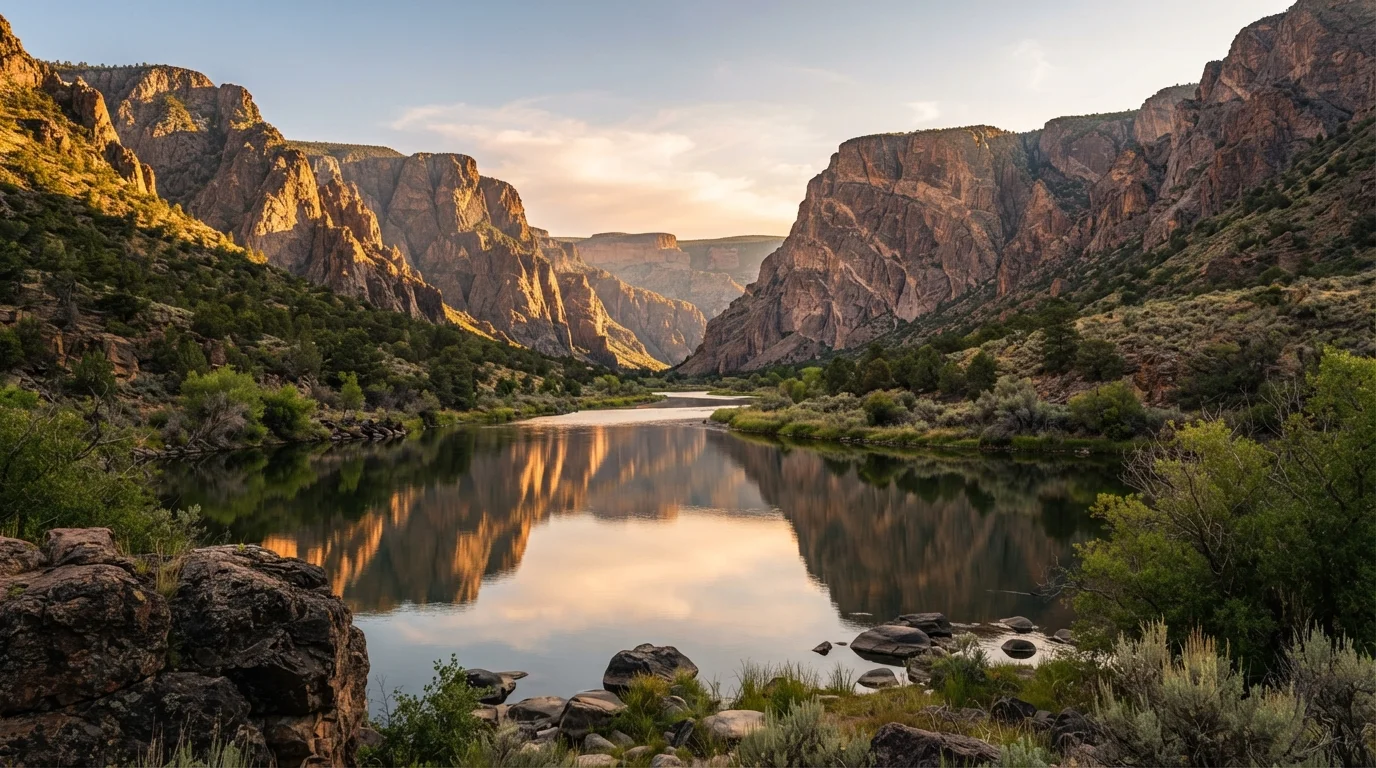
Photo: InsightsTurbo.com | Kickstart Your Knowledge Quest editorial
Key Takeaways
- Many US national parks receive fewer than 100,000 visitors annually, offering genuine solitude and untouched scenery.
- Skipping the blockbuster parks doesn't mean settling — lesser-visited parks hold equally dramatic landscapes.
- Lower visitation means fewer permit headaches, easier camping reservations, and more spontaneous itineraries.
- Each underrated park suits a specific travel style — from geology lovers to paddlers to high-altitude hikers.
- Visiting off-peak parks supports local gateway communities that depend on distributed tourism revenue.
The Case for Going Off-Script
Every summer, millions of travelers funnel into the same five or six marquee parks — and return home with memories of parking queues, full campgrounds, and elbows-out viewpoints. The US National Park System actually protects over 400 sites, yet a handful of them absorb the overwhelming majority of visits. That math has a silver lining: the rest are wide open.
Choosing a lesser-visited park isn't a compromise — it's a strategic upgrade. You'll spend less time planning around permit lotteries and more time actually in the landscape. And if you're already thinking through a broader road trip, our guide to road-tripping the American Southwest covers how to string multiple parks together realistically. Below, we've pulled together parks that consistently get overlooked — and genuinely shouldn't be.
Great Basin National Park, Nevada
Tucked into eastern Nevada near the Utah border, Great Basin draws fewer than 150,000 visitors in most years — a fraction of what Zion or Bryce Canyon see in a single busy month. Yet the park contains ancient bristlecone pines (among the oldest living organisms on Earth), a glacier, and Lehman Caves, a remarkably intact marble cavern system. The elevation reaches nearly 13,000 feet at Wheeler Peak, making it a legitimate alpine destination in a state most people associate with desert flatlands.
Dark sky viewing here is extraordinary — Great Basin is a certified International Dark Sky Park, and on a clear night the Milky Way is visible to the naked eye in a way that's increasingly rare in the lower 48.
Ancient bristlecone pines, a glacier, and world-class dark skies — all in one undervisited Nevada park.
Congaree National Park, South Carolina
South Carolina's only national park protects the largest intact expanse of old-growth bottomland hardwood forest in the southeastern US. Congaree is frequently mischaracterized as a swamp — it's actually a floodplain, and the distinction matters. The towering loblolly pines and bald cypresses form a canopy so dense it has been measured as one of the tallest temperate deciduous forests in the world.
Boardwalk trails make much of the park accessible without technical gear, and canoe or kayak trips along Cedar Creek offer a quietly stunning way to move through the forest. Firefly season in late May brings synchronous firefly displays that rival any natural light show on the continent.
Congaree's towering old-growth canopy and synchronous firefly displays are genuinely world-class natural spectacles.
Isle Royale National Park, Michigan
Isle Royale requires a ferry or seaplane to reach — and that friction is precisely what keeps it uncrowded. This island archipelago in Lake Superior is the least-visited national park in the contiguous United States by design: there are no roads, no cars, and no shortcuts. What you get instead is 165 miles of hiking trails, crystal-clear inland lakes, and some of the most intact wilderness in the Great Lakes region.
The park is famous for its long-running wolf and moose ecological study, one of the longest predator-prey studies in the world. Wildlife sightings are common, and the remoteness encourages the kind of slow, immersive travel that's increasingly hard to find. Slow travel as a philosophy fits Isle Royale perfectly — this is not a park you sprint through.
Isle Royale's car-free, ferry-access-only setup makes it one of the most genuinely remote experiences in the lower 48.
North Cascades National Park, Washington
Often called the "American Alps," North Cascades contains more glaciers than any other US national park outside of Alaska. Despite sitting within a few hours' drive of Seattle, it receives a tiny fraction of the visitors that nearby Olympic or Mount Rainier attract. The jagged peaks, sapphire glacial lakes, and dense old-growth valleys reward hikers willing to put in modest effort — but even a drive along the North Cascades Highway (State Route 20) offers views that would headline any other park's brochure.
The park's three units include recreational areas where boating and fishing are permitted, giving it more flexibility than many wilderness-focused parks. Note that the highway closes seasonally due to snow — typically from late fall through spring — so timing matters.
North Cascades holds more glaciers than any US park outside Alaska, yet draws only a sliver of its neighbors' crowds.
Black Canyon of the Gunnison, Colorado
The Black Canyon drops so steeply and narrows so dramatically that sunlight reaches its inner walls for only a few minutes each day — hence the name. This Colorado park protects a 48-mile stretch of the Gunnison River's most extreme gorge, with sheer walls of dark Precambrian rock that plunge over 2,700 feet in places. The views from the South Rim are immediate and vertiginous — no long approach hike required.
For those comfortable with more technical terrain, the inner canyon descents (classified as "routes" rather than trails) are among the most challenging non-technical wilderness experiences in the country. Most visitors don't attempt them, which means the canyon floor sees almost no foot traffic. Combined with Colorado's broader road-trip potential, it pairs naturally with a Southwest road trip itinerary that ventures east of Utah.
Sunlight reaches Black Canyon's inner walls for only minutes each day — a geological drama that very few travelers witness.
Guadalupe Mountains National Park, Texas
Most visitors to West Texas head straight for Big Bend — and Guadalupe Mountains, just to the north, is left almost entirely to itself. The park contains the highest peak in Texas (Guadalupe Peak at 8,751 feet) and an ancient marine fossil reef that once lay at the bottom of a shallow inland sea. The geology here is tangible: you can read 250 million years of Earth history in the exposed limestone formations.
Fall foliage in McKittrick Canyon surprises visitors who assume West Texas is all scrubland — the bigtooth maples turn vivid red and orange in October, creating a display that feels completely out of place in the Chihuahuan Desert. Facilities are minimal by design, so come prepared with water, food, and a paper map.
Guadalupe Mountains' fossil reef and surprise fall foliage make it one of Texas's best-kept geological secrets.
Planning Your Visit Smarter
Even undervisited parks have their own seasonal rhythms. Some are inaccessible in winter due to road closures; others peak in spring when wildflowers or migratory birds arrive. Before you commit to dates, check the official National Park Service website for each park's specific alerts, road conditions, and any reservation systems in place — these details change year to year and shouldn't be assumed from travel blogs.
Check NPS.gov Before You Go
If you're the kind of traveler who does serious pre-trip research, destination research methods that go beyond top-ten lists can help you surface details that generic guides miss — trail difficulty gradients, water source reliability, or whether a gateway town has a grocery store. That kind of groundwork is especially useful when you're venturing somewhere with limited ranger station hours or spotty cell service.
One final thought: if you've been burned before by overhyped destinations that didn't live up to the Instagram reel, understanding why popular trips disappoint is worth a read. The takeaway applies equally to land-based travel — crowds, timing, and inflated expectations are the real trip-killers, not the destination itself.
The content provided on our blog site traverses numerous categories, offering readers valuable and practical information. Readers can use the editorial team’s research and data to gain more insights into their topics of interest. However, they are requested not to treat the articles as conclusive. The website team cannot be held responsible for differences in data or inaccuracies found across other platforms. Please also note that the site might also miss out on various schemes and offers available that the readers may find more beneficial than the ones we cover.