
Solo Travel vs. Group Travel: Planning Differences That Actually Matter

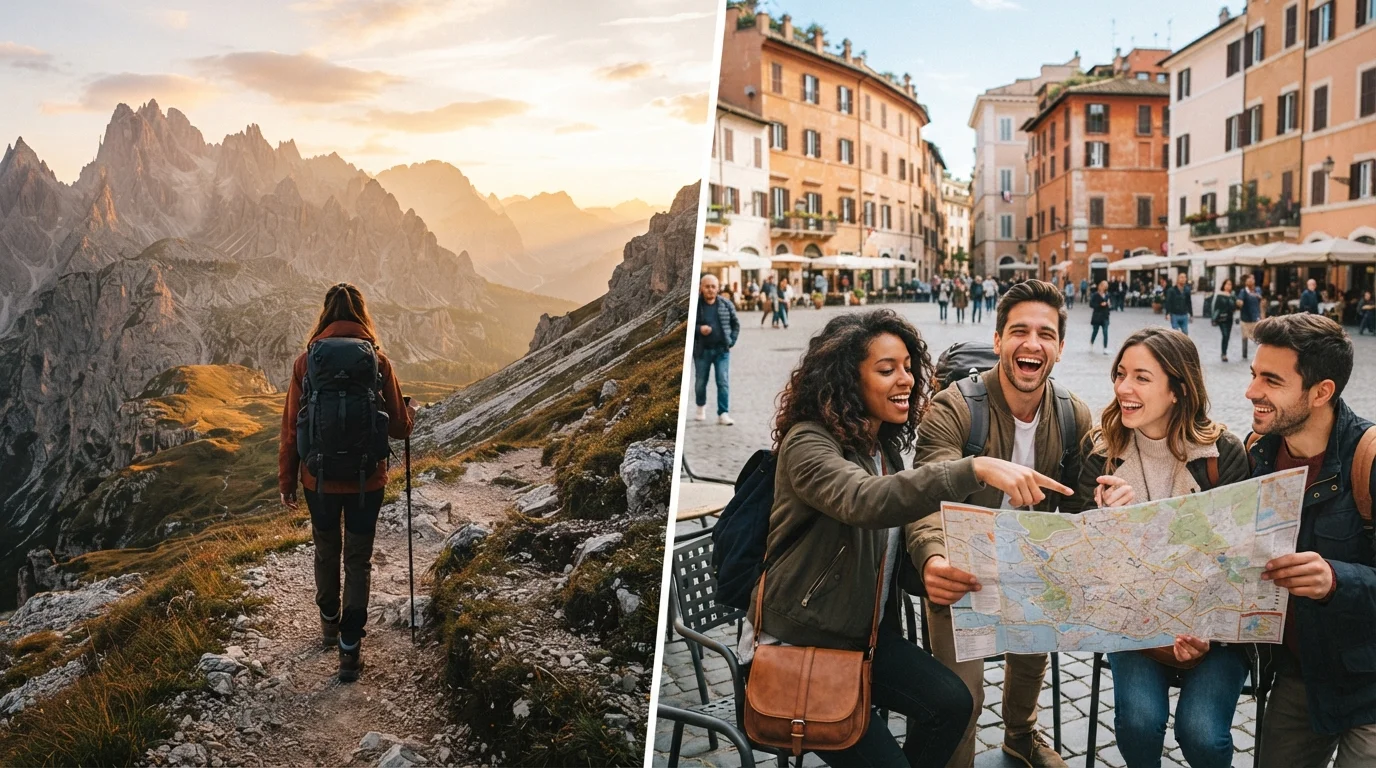
Photo: InsightsTurbo.com | Kickstart Your Knowledge Quest editorial
Key Takeaways
- Solo travel offers maximum flexibility but places every logistical decision solely on you.
- Group travel distributes planning effort but requires consensus, which can slow decision-making.
- Accommodation and transportation choices look significantly different depending on group size.
- Budget tracking is simpler solo; group trips need explicit cost-sharing agreements upfront.
- Safety planning is more self-reliant when traveling alone — preparation matters more.
- Neither approach is universally better; the right choice depends on your destination and travel style.
How Planning Complexity Differs Right From the Start
The moment you decide whether you're going solo or with a group, the shape of your planning process changes entirely. Solo travel is operationally lean: you research what you want, confirm it fits your schedule and budget, and book. Group travel introduces a layer of coordination — aligning availability, preferences, and financial expectations across multiple people — before a single booking is made.
For solo travelers, the biggest early challenge is information overload. You're the only researcher, so building a reliable framework helps. Our end-to-end trip planning guide walks through this process from destination selection to pre-departure logistics.
For group trips, the planning challenge is consensus. Before diving into flights or hotels, it helps to establish a few things upfront: a realistic shared budget range, must-have versus nice-to-have experiences, and a lead planner or rotating decision-maker. Skipping this step is one of the most common reasons group trips fall apart mid-planning.
| Criterion | Solo Travel | Group Travel |
|---|---|---|
| Planning effort | All on you, but simpler decisions | Shared, but requires consensus |
| Itinerary flexibility | Fully flexible, anytime | Limited by group agreement |
| Accommodation costs | Full cost absorbed solo | Split across travelers |
| Transportation | Transit-friendly, highly adaptable | Rentals or transfers often more practical |
| Budget transparency | Simple, single-source tracking | Requires shared expense management |
| Safety support | Self-reliant; preparation essential | Built-in peer support |
| Decision speed | Instant | Slower; needs group buy-in |
| Social experience | Organic, often deeper local connection | Shared memories with companions |
Budgeting: Self-Contained vs. Shared Finances
Solo budgeting is transparent — you know exactly what you're spending because it's all coming from one source. You can make trade-offs quickly, like choosing a hostel dorm over a private room without needing to justify it to anyone. If you're new to building a travel budget, understanding accommodation trade-offs is one of the fastest ways to find meaningful savings.
Group budgeting is more powerful in some areas — splitting a vacation rental, a private tour, or a hire car across four people can make those options accessible where they'd be impractical solo. But it requires transparency. Agreeing on a per-person daily budget, using a shared expense tracker, and deciding in advance who covers what (and how reimbursements work) prevents awkward conversations later.
72%
Solo travelers report improved confidence post-trip
According to a survey by Solo Traveler World, the majority of solo travelers say solo trips significantly boosted their self-reliance and decision-making confidence.
30–50%
Potential per-person savings on accommodation in groups
Industry travel research consistently notes that splitting vacation rentals or hotel rooms across groups of four or more can reduce individual accommodation costs substantially compared to solo bookings.
3x
More itinerary changes made by solo travelers mid-trip
Travel behavior studies suggest solo travelers are significantly more likely to modify their plans during a trip, reflecting the flexibility advantage of traveling alone.
One often-overlooked factor: timing. Group trips frequently cost more when schedules are constrained to a narrow window that happens to fall during peak travel season. Solo travelers have more freedom to shift dates to reduce costs. See how shoulder vs. peak season timing affects both price and experience.
Logistics and Flexibility: Where the Real Differences Show Up
Solo travelers can make same-day decisions without consequence — extending a stay, rerouting to a new city, or skipping an activity entirely. This flexibility is genuinely valuable and is one of the reasons many experienced travelers prefer going solo even after years of group trips.
Group travelers trade that flexibility for shared experience. A side-by-side comparison of travel styles can help clarify what that trade-off really means in practice — city breaks versus slow travel is a useful lens, since group dynamics tend to favor structured city itineraries over open-ended slow travel.
On the logistics side, transportation choices shift significantly. Solo travelers often lean on public transit, which is cost-effective and easy to adjust. Groups frequently find that a rental vehicle or private transfers become more practical once you factor in coordinating multiple people across transit systems. Similarly, how you book matters — some platforms offer group booking tools or multi-room discounts that direct booking doesn't.
Package Trips as a Middle Ground
Safety, Support, and the Emotional Weight of Each Approach
Solo travel places full responsibility for safety awareness on you. That's not a reason to avoid it — most solo travelers report feeling safe the vast majority of the time — but it does require more deliberate preparation. Sharing your itinerary with someone at home, checking government travel advisories before departure, and staying connected abroad are all basic habits that matter more when no one's watching your back in real time. Our guide to staying connected abroad covers practical options worth knowing before you go.
If persistent myths about solo travel safety are holding you back, it's worth separating fact from assumption — common solo travel myths covers what the reality actually looks like for most people.
Group travel provides built-in emotional and practical support: someone to watch your bag, a second opinion when something feels off, and company during delays or disruptions. The trade-off is that group dynamics add their own stress — disagreements about activities, pacing mismatches, or one person's poor planning affecting everyone. Setting expectations early, ideally in writing, dramatically reduces friction.
Ultimately, both approaches are valid. The right one depends on where you're going, who you are as a traveler, and what kind of experience you're genuinely after.
The content provided on our blog site traverses numerous categories, offering readers valuable and practical information. Readers can use the editorial team’s research and data to gain more insights into their topics of interest. However, they are requested not to treat the articles as conclusive. The website team cannot be held responsible for differences in data or inaccuracies found across other platforms. Please also note that the site might also miss out on various schemes and offers available that the readers may find more beneficial than the ones we cover.