
What 'Full Sun', 'Partial Shade', and 'Deep Shade' Mean for Where You Plant

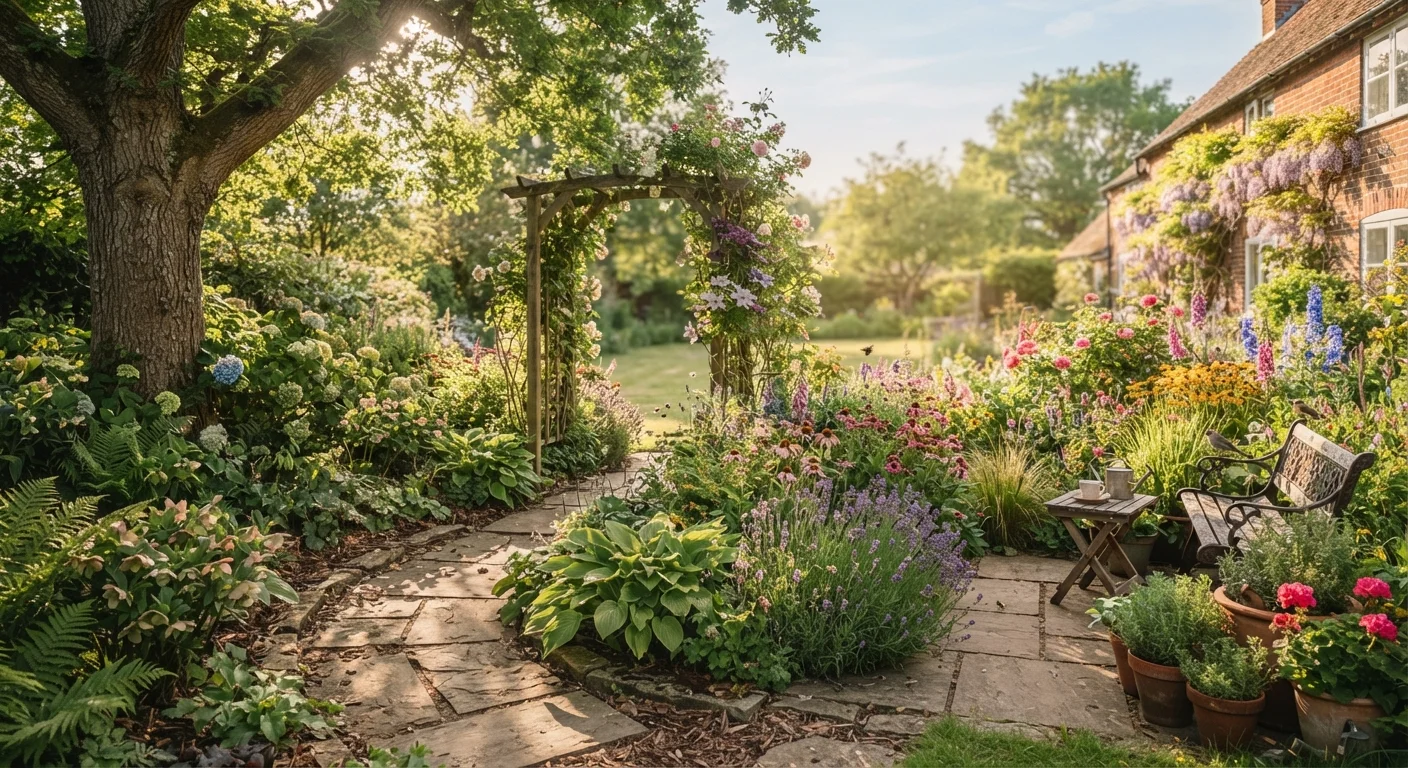
Photo: InsightsTurbo.com | Kickstart Your Knowledge Quest editorial
Why Light Labels on Plant Tags Actually Matter
If you've ever bought a plant, watched it struggle, and wondered what went wrong, sunlight exposure is often the culprit. Every plant tag or seed packet carries a light requirement - full sun, partial shade, full shade, or some variation - and matching that label to your actual outdoor space is one of the most important decisions a new gardener makes.
These aren't vague suggestions. They describe the number of hours of direct sunlight a plant needs each day to grow, flower, and stay healthy. Get it right and you're working with your garden's natural conditions. Get it wrong and even a healthy plant from a good nursery will stall out or decline.
This guide breaks down each light category, explains how to measure what you have, and helps you match plants to the spots you're actually working with. Once you understand light, decisions like choosing between raised beds and in-ground planting become much easier too.
| Full Sun Definition | 6+ hours of direct sunlight per day |
| Partial Shade / Partial Sun | 3-6 hours of direct sunlight per day |
| Full Shade Definition | Fewer than 3 hours of direct sunlight per day |
| Deep Shade | Minimal to no direct or indirect sunlight |
| Best assessment method | Observe hourly on a clear day, count direct sun hours per zone |
| Morning vs. afternoon sun | Afternoon sun is more intense; critical for partial shade plants |
The Four Light Categories Explained
Plant labels generally use four terms. Here's what each one means in practical, measurable terms:
Full Sun
A location that receives 6 or more hours of direct, unobstructed sunlight per day. Most vegetables, many herbs, and flowering annuals require full sun to produce well.
Partial Sun / Partial Shade
A location that receives 3 to 6 hours of direct sunlight daily, with shade for the rest. These two terms are often used interchangeably, though 'partial sun' leans toward the higher end and 'partial shade' toward the lower end of that range.
Full Shade
A location that receives fewer than 3 hours of direct sunlight per day. This doesn't mean total darkness - bright, indirect light still supports shade-tolerant plants like ferns and hostas.
Deep Shade
Conditions with very little to no direct or indirect sunlight, typically found under dense evergreen canopy or against north-facing walls with obstructions. Very few plants thrive here, and soil in these areas can stay persistently damp or dry depending on root competition.
Direct Sunlight
Sunlight that falls on a surface without obstruction - no canopy, structure, or fence blocking the sun's rays. This is what counts when measuring light requirements on a plant label.
Dappled Light
Broken, shifting light that filters through tree leaves or an open lattice. It's a common condition under deciduous trees and generally suits partial shade plants well.
One important nuance: morning sun vs. afternoon sun matters even within the same daily total. Morning sun is gentler; afternoon sun in summer can be intense enough to scorch plants labeled as partial shade. A spot that gets four hours of harsh western afternoon sun may stress plants that thrive in four hours of cooler eastern morning light. Pay attention to when the sun hits your space, not just for how long.
These same principles apply whether you're gardening in the ground or in containers. If you're working with a balcony or patio, container gardening light considerations follow the exact same framework.
How to Assess the Light in Your Own Yard
You don't need special equipment - just a free day and a little attention. Here's a straightforward method:
- Pick a clear day with no heavy cloud cover.
- Check your space every hour or two, from around 8 a.m. to 6 p.m. Note which areas are in direct sun and which are shaded at each check.
- Count the hours of direct sun each zone receives and categorize accordingly.
- Note the direction - south-facing areas typically receive the most sun in the Northern Hemisphere; north-facing spots tend toward shade.
Repeat this exercise at different times of year if possible, since the sun's angle changes significantly between spring and midsummer. A spot that qualifies as full sun in June may drop to partial shade in early April when the sun is lower.
Conditions Change Through the Season
Light assessment pairs well with understanding your soil. Once you know what your garden's light zones look like, pairing that knowledge with the right soil and compost mix gives your plants the best possible foundation.
For a fuller picture of plant selection, it also helps to know how hardiness zones interact with light requirements - especially if you're shopping for perennials that need to survive winter. Speaking of which, knowing whether a plant is annual or perennial affects how much its light needs matter season to season.
The content provided on our blog site traverses numerous categories, offering readers valuable and practical information. Readers can use the editorial team’s research and data to gain more insights into their topics of interest. However, they are requested not to treat the articles as conclusive. The website team cannot be held responsible for differences in data or inaccuracies found across other platforms. Please also note that the site might also miss out on various schemes and offers available that the readers may find more beneficial than the ones we cover.