
Syrian Hamster vs. Dwarf Hamster: Understanding the Differences

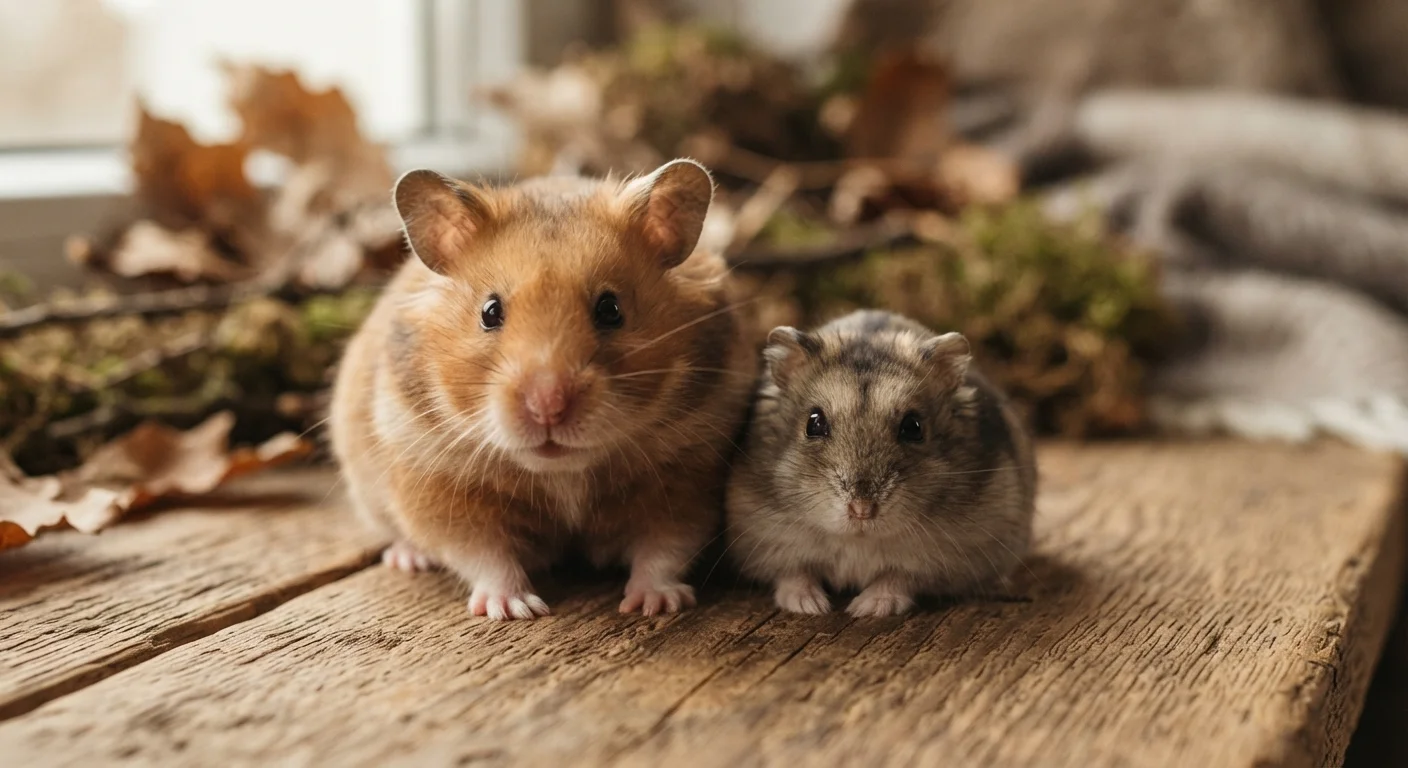
Photo: InsightsTurbo.com | Kickstart Your Knowledge Quest editorial
Key Takeaways
- Syrian hamsters are significantly larger and must always be housed alone to prevent injury or death.
- Dwarf hamsters (Roborovski, Campbell's, Winter White) can live in same-sex pairs if introduced early.
- Syrians are generally easier to tame and handle, making them more beginner-friendly.
- Both types are crepuscular, meaning they're most active around dawn and dusk — not purely nocturnal.
- Dwarf hamsters need just as much space as Syrians despite their smaller size.
- Lifespan is similar: roughly 2–3 years for Syrians, 1.5–3 years depending on dwarf species.
Size and Species: What You're Actually Choosing Between
The term "dwarf hamster" covers several distinct species — most commonly the Roborovski, Campbell's dwarf, and Winter White (Djungarian). All three weigh roughly 1–2 oz and reach 2–4 inches in length. Syrian hamsters, sometimes called golden or teddy bear hamsters, are a single species that typically weigh 4–8 oz and stretch 5–7 inches long. That's a meaningful size difference in handling, housing, and visibility.
If you're still deciding whether a hamster is the right fit at all, our comparison of popular small pets covers where hamsters sit alongside guinea pigs, rabbits, and fish.
| Criterion | Syrian Hamster | Dwarf Hamster |
|---|---|---|
| Typical size | 5–7 inches, 4–8 oz | 2–4 inches, 1–2 oz |
| Can be housed in pairs | No — always solitary | Sometimes (species-dependent) |
| Ease of taming | Generally easier | More challenging, stays skittish |
| Typical lifespan | 2–3 years | 1.5–3 years |
| Minimum cage floor space | ~620 sq in | ~620 sq in |
| Activity pattern | Crepuscular | Crepuscular |
| Best for beginners | Yes | With research |
Temperament and Handleability
Syrian hamsters are widely considered the more beginner-friendly option. They're slower-moving, tend to tolerate being picked up with consistent daily interaction, and usually give clear signals before biting. Dwarf hamsters are quick, agile, and more prone to startling — not aggressive by nature, but harder to hold onto and easier to drop accidentally.
Taming either type takes patience and consistency. However, dwarfs generally remain more skittish even after weeks of handling, whereas a well-socialized Syrian often becomes noticeably calm. Neither species bonds the way a dog or cat does, but Syrians do tend to show more tolerance of human contact over time.
620 sq in
Recommended minimum cage floor space
Animal welfare organizations broadly align on this minimum for hamsters of any size, though larger is always better.
2–3 years
Average Syrian hamster lifespan
Lifespan varies by genetics, diet, and husbandry; some individuals live slightly longer under optimal conditions.
It's also worth correcting a common misconception: hamsters aren't purely nocturnal. They're crepuscular, meaning peak activity happens around dusk and dawn. Expecting a hamster to be lively mid-afternoon will lead to frustration — and unnecessary disturbance of a sleeping animal. Our article on small pet myths unpacks this and other widely held misunderstandings.
Housing, Space, and Social Needs
One of the most common misconceptions new owners bring to dwarf hamsters is that their small size means they need less space. Animal welfare guidelines generally recommend a minimum of 40 gallons or approximately 620 square inches of unobstructed floor space for any hamster species — dwarfs included. Both Syrian and dwarf hamsters need room to run (a solid-surface wheel of at least 8–10 inches diameter for Syrians, 6–8 inches for dwarfs), burrow, forage, and rest.
Where they diverge sharply is on cohabitation. Syrian hamsters are solitary animals and must always live alone. Housing two Syrians together — even briefly — risks serious injury or death from territorial fighting. Certain dwarf species, particularly Winter Whites and Campbell's, can live in same-sex pairs if introduced as juveniles and given enough space, but conflicts can still develop and require separating them. Roborovskis can sometimes be kept in groups.
Watch for Signs of Conflict in Paired Dwarfs
For a full walkthrough of cage setup, feeding schedules, and handling technique, see our guide on hamster care from day one.
Lifespan, Health, and What to Realistically Expect
Syrian hamsters typically live 2–3 years; dwarf species range from about 1.5 years (Roborovski) to closer to 3 years under good conditions. Neither is a long-term commitment compared to a dog, but a 2-year lifespan is still meaningful — particularly for families with young children who may struggle with loss.
Both types are susceptible to common hamster health issues including dental problems, wet tail (a bacterial digestive illness more common in Syrians under stress), respiratory infections, and tumors in older animals. Finding a veterinarian experienced with small exotic mammals before you need one is a practical first step. For a broader comparison of small pet health considerations and lifespans, our small pet reference guide is a useful starting point.
This article is for general informational purposes only and does not constitute veterinary advice. Consult a qualified exotic animal veterinarian for health concerns specific to your pet.
The content provided on our blog site traverses numerous categories, offering readers valuable and practical information. Readers can use the editorial team’s research and data to gain more insights into their topics of interest. However, they are requested not to treat the articles as conclusive. The website team cannot be held responsible for differences in data or inaccuracies found across other platforms. Please also note that the site might also miss out on various schemes and offers available that the readers may find more beneficial than the ones we cover.