
Rabbits, Hamsters, Guinea Pigs, or Fish: Which Small Pet Fits Your Life?

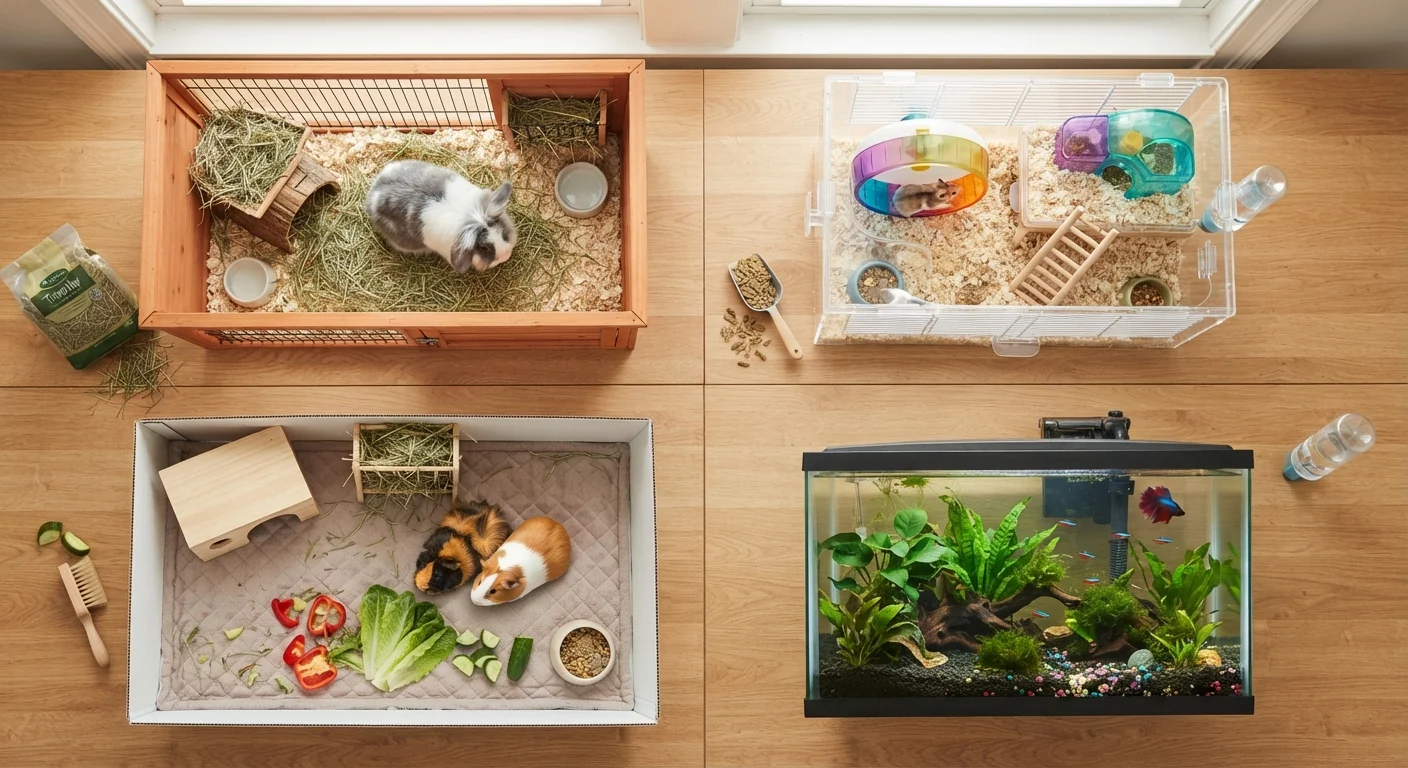
Photo: InsightsTurbo.com | Kickstart Your Knowledge Quest editorial
Key Takeaways
- No small pet is truly zero-effort — all four require daily feeding, cleaning, and monitoring.
- Rabbits and guinea pigs are social animals that can suffer without consistent interaction and enrichment.
- Hamsters are nocturnal, making them a better fit for households with evening availability.
- Fish tanks must complete a nitrogen cycle — a weeks-long process — before fish are safely introduced.
- Lifespans vary significantly: 2–3 years for hamsters versus up to 12 years for rabbits.
- Match your choice to your actual schedule, space, and lifestyle rather than which animal looks most appealing.
What to Consider Before You Choose
Small pets are frequently marketed as easy starter animals, but each species has genuine care requirements. Before choosing, honestly assess four things: how much space you can dedicate, how much daily time you actually have, whether you want an animal you can handle and interact with directly, and how long you are prepared to commit. A rabbit and a hamster share a category label but almost nothing else. For a frank look at the ongoing financial reality of ownership, see The Hidden Costs of Owning a Small Pet — the upfront price is rarely the whole story.
Rabbits: Social, Long-Lived, and Often Misunderstood
Rabbits live 8 to 12 years on average and need more space and daily attention than most beginners anticipate. A single rabbit requires a large enclosure — considerably larger than standard pet-store hutches — plus several hours of supervised free-roaming time each day. They can form genuine bonds with owners, but as prey animals they often dislike being picked up, which surprises people expecting a cuddly companion.
Their diet should be primarily hay, supplemented with leafy greens and limited pellets. Rabbits also benefit from spaying or neutering to reduce health and behavioral risks, and they require a vet experienced with exotic animals. Rabbit Ownership: The Rewarding Parts and the Realities gives a grounded look at what daily life with one actually involves.
Hamsters: Independent, Small, and Nocturnal
Hamsters appeal to beginners because of their small size and relatively contained housing footprint — but their schedule does not align with most daytime households. Syrian hamsters, the most common type, are solitary and should always be housed alone. They are naturally nocturnal, sleeping through much of the day and becoming active from late evening onward. That pattern can work well for people who are home in the evenings.
Their lifespan is typically 2 to 3 years. They can be tamed with patient handling but are fragile and not well suited for young children. Before committing, Syrian Hamster vs. Dwarf Hamster explains how significantly the two main hamster types differ in temperament and housing needs.
Guinea Pigs: Gentle, Vocal, and Best in Pairs
Guinea pigs are genuinely social animals that do best in pairs or small groups and are active during the day, making interaction more natural than with nocturnal species. They vocalize frequently — chirps, purrs, and occasional excited squealing — and can become quite tame with consistent, gentle handling. Their lifespan ranges from 4 to 7 years, and they need fresh vegetables daily, particularly foods rich in vitamin C.
Guinea Pigs Can't Make Their Own Vitamin C
Guinea Pig or Rabbit: Choosing Between Two Popular Companion Animals covers where these two popular species overlap — and where they differ sharply in space, diet, and social needs.
Fish: Low Handling, More Setup Than Expected
Fish offer a genuinely hands-off experience — no handling, no litter, no nocturnal wheel noise. But they are not maintenance-free. Before any fish are introduced, a tank must complete the nitrogen cycle, a biological process that establishes the bacterial colonies needed to keep water chemistry stable. This typically takes four to six weeks, and skipping it is one of the most common causes of early fish loss.
Ongoing responsibilities include consistent feeding, regular water changes, and monitoring water parameters. Freshwater setups are generally more forgiving for beginners than saltwater. For corrections to widespread fish care misconceptions, see Small Pet Myths That New Owners Believe Too Often.
Side-by-Side at a Glance
| Rabbit | Hamster | Guinea Pig | Fish | |
|---|---|---|---|---|
| Typical lifespan | 8–12 years | 2–3 years | 4–7 years | Varies by species |
| Space required | Large enclosure + daily roaming | Large cage | Large cage (pairs) | Tank (size varies by species) |
| Peak activity hours | Daytime/evening | Nocturnal | Daytime | N/A |
| Social with people | Bonds; dislikes handling | Can be tamed | Tolerant and friendly | No interaction |
| Needs animal companions | Optional | No — housed alone | Yes — pairs minimum | Depends on species |
| Daily time commitment | High | Moderate | Moderate–High | Low–Moderate |
| Vet care complexity | High (exotic specialist) | Moderate | Moderate | Limited; illness hard to treat |
The right small pet is not the one that requires the least from you in theory — it is the one whose needs genuinely fit your life. Before bringing any of these animals home, Everything You Need Before Bringing a Small Pet Home walks through the enclosures, supplies, and setup you will need. For a full quick-reference across species — including temperament and vet considerations — Small Pet Lifespans, Temperaments, and Care Demands at a Glance covers it all in one place.
The content provided on our blog site traverses numerous categories, offering readers valuable and practical information. Readers can use the editorial team’s research and data to gain more insights into their topics of interest. However, they are requested not to treat the articles as conclusive. The website team cannot be held responsible for differences in data or inaccuracies found across other platforms. Please also note that the site might also miss out on various schemes and offers available that the readers may find more beneficial than the ones we cover.